
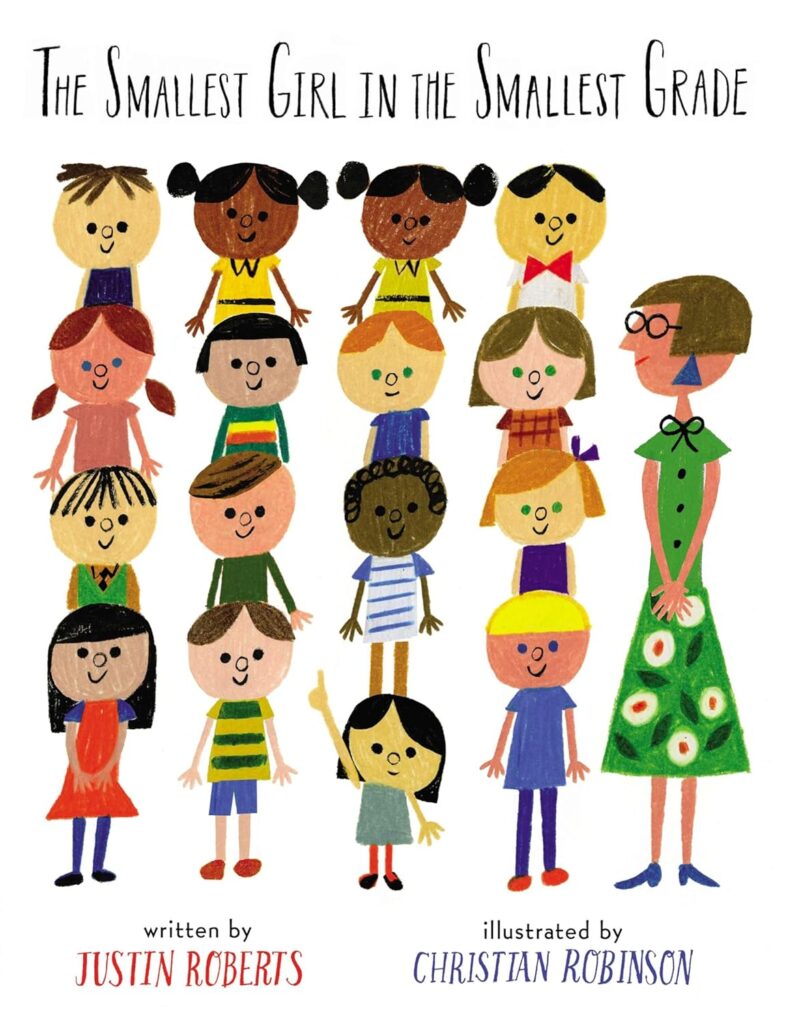
The Smallest Girl in the Smallest Grade tells the story of Sally McCabe, a quiet girl who notices everything around her—especially the small injustices and unkindness that others overlook. One day, she decides to take a stand, proving that even the smallest voices can make a big difference. This book encourages students to recognize their own power to speak up against unfairness and promote kindness in their communities.
Discussion Questions
- What kind of things does Sally notice that other kids don’t? Why is she paying attention?
- What kinds of unfair things does Sally see happening at her school? How do they make her feel?
- How do you think Sally feels when she sees others being treated unfairly? Have you ever felt that way?
- Why do you think the other kids don’t speak up? What might be stopping them?
- What do you think will happen when Sally decides to raise her voice?
- How does Sally feel when she finally speaks up? How does her body language show it?
- How do the other kids react when Sally speaks up? Why does this matter?
- What happens when more students start noticing and helping others? How does the school begin to change?
- How does Sally’s confidence grow by the end of the book? How does that relate to standing up for others?
- What lesson does this story teach us about using our voices? How can we apply it to our own lives?
Activities
- Noticing Kindness: create a kindness chart in your classroom or home. Each time someone notices someone else being kind of standing up for someone else, add a drawing and/or short sentence to the chart. At the end of the week, discuss how noticing kindness makes everyone feel.
- Stand Up and Speak Out: Discuss “what are some situations where people might feel left out or treated unfairly?” Brainstorm three ways to stand up when you see unkindness.