
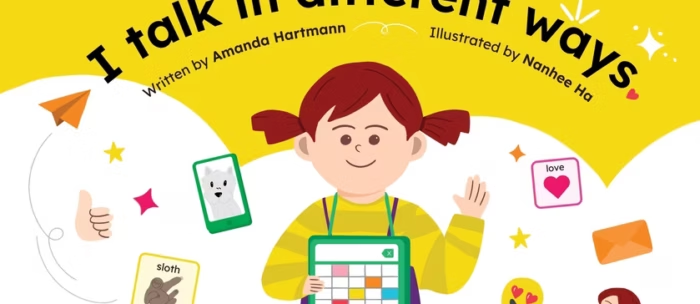
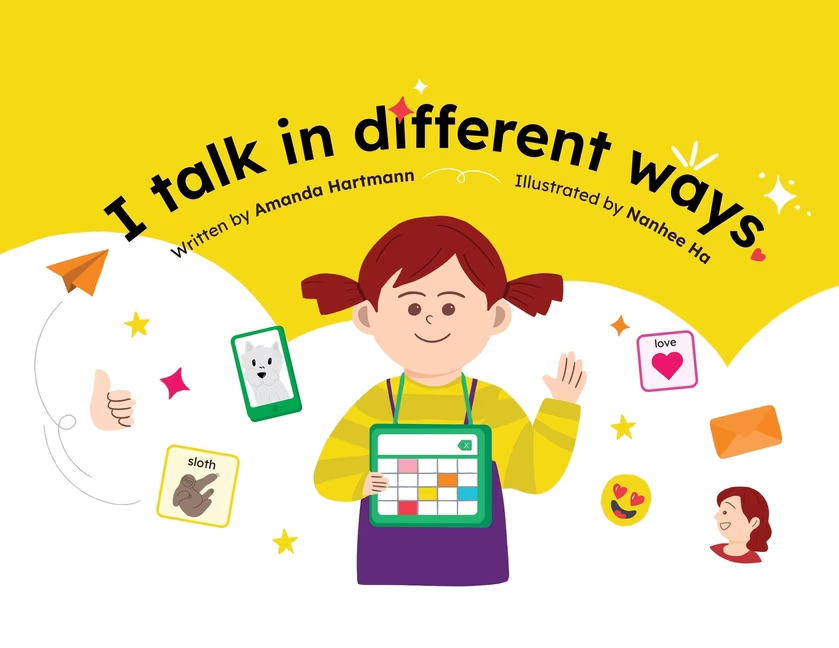
I Talk in Different Ways by Amanda Hartmann is a heartwarming picture book that celebrates the many ways people communicate. Through the eyes of a young AAC (Augmentative and Alternative Communication) user, readers discover that talking isn’t limited to spoken words. Gestures, pictures, devices, expressions, and actions can all help us share our thoughts, feelings, and ideas. This inclusive story helps readers understand and appreciate different communication styles while promoting empathy, acceptance, and the belief that everyone has a voice worth hearing
Discussion Questions
- How does the child in the story communicate with others?
- What are some different ways people can communicate besides talking?
- What did you learn about AAC from this book?
- Why is it important for everyone to have a way to share their thoughts and feelings?
- What was your favorite part of the story? Why?
Making Connections
- Have you ever communicated without using words? What did you do?
- How do you let people know when you’re happy, excited, or upset?
- Have you ever met someone who communicates differently from you?
- What are some ways your family communicates with each other?
- What would be difficult if you couldn’t use spoken words?
Building Empathy and Inclusion
- How can we make sure everyone feels included in conversations?
- What can you do if someone communicates differently than you do?
- Why is it important to be patient when someone is sharing their ideas?
- How would you feel if people didn’t listen to your way of communicating?
- What does the book teach us about respecting differences?
Activity
Many Ways to Communicate
Objective: Help students understand that people communicate in different ways and that every form of communication is important.
Materials:
- Index cards or paper
- Markers/crayons
- Optional: picture symbols, stickers, or tablet/device
Directions:
- Divide students into small groups or pairs.
- Give each student a simple message to communicate (examples: “I’m hungry,” “Let’s play,” “I need help,” “I like dogs”).
- Challenge them to share their message without speaking. They can:
- Draw a picture
- Use gestures
- Point
- Act it out with facial expressions and body language
- Use picture cards
- Classmates try to guess the message.
- After everyone has had a turn, discuss:
- Which communication methods were easiest to understand?
- Which were more challenging?
- How did it feel to communicate without speaking?
- What can we do to help people who communicate differently?