
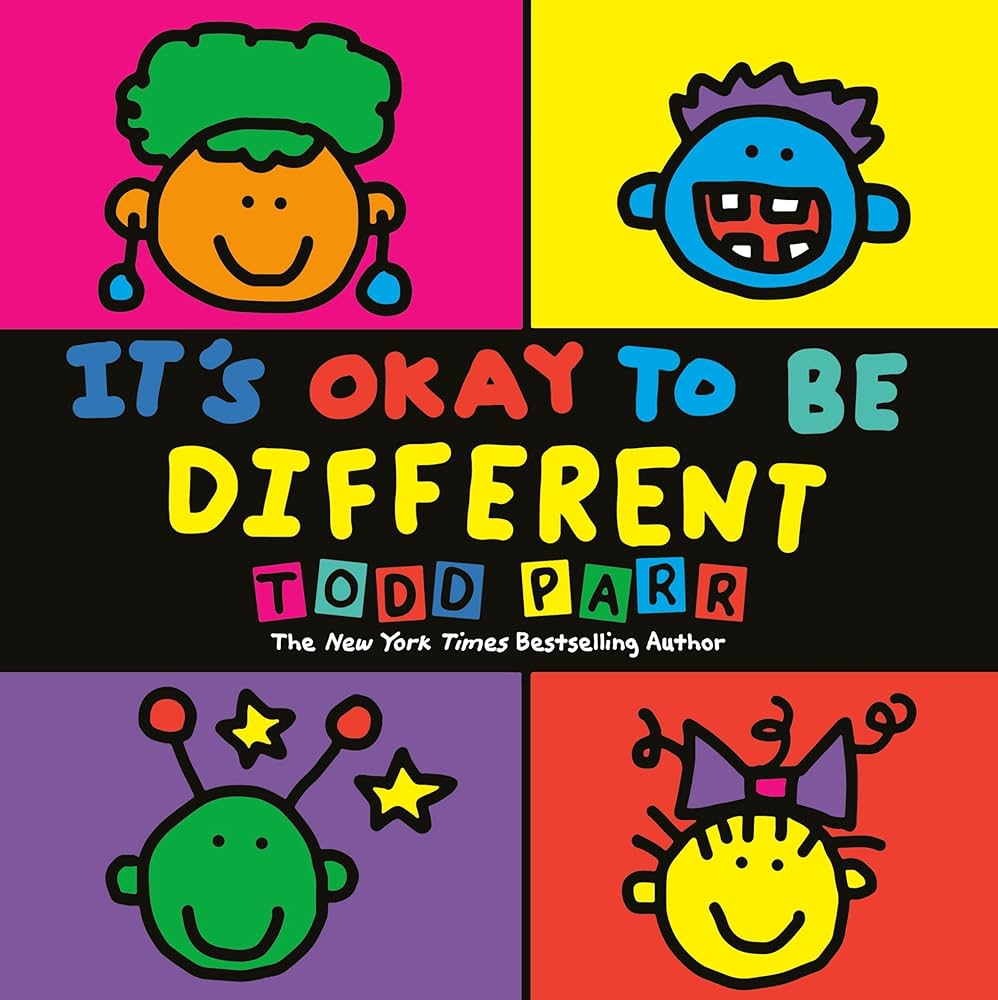
It’s Okay to Be Different by Todd Parr uses simple, colorful illustrations and text to teach acceptance, diversity, and self-confidence by celebrating individuality. It features silly, relatable scenarios, like eating mac and cheese in the bathtub or having a pet worm, to encourage readers to embrace their uniqueness and understand that everyone is different in their own way. This book is a great way to start a conversation about diversity with young students.
Discussion Questions
- Before reading the book, introduce the idea of differences/similarities by asking the group to respond to several of the following statements: Stand up if you have freckles/red hair/have lost a tooth/are wearing sneakers, etc. Then ask the children to think of other ways we are different from each other.
- Read the book, stopping to ask if anyone knows someone who is like a given character. Which, if any, characters are like you?
- “Look at the person next to you. What can you see that’s the same? What can you see that’s different? Are there more similarities or differences?”
- Brainstorm a list of positive comments that can be made to others (if you’d like to turn this into an activity, write down the ideas and post them somewhere so you’ll be reminded of them)
Activities
- Complete this It’s Ok to be Different activity sheet
- Download this chart. Brainstorm until there are several examples on each side of the chart.
- Cut out and tape a paper silhouette to a wall or the classroom board.
- Talk about how we can make others feel good or bad about their differences.
- Give an example of a negative comment made to someone and “tear” a piece of body part from the silhouette. “Does the paper person look the same (no, a piece of them is gone)? That is what happens when we make choices to say negative comments to others.”
- Have several students come up and state a negative comment and tear a body part off.
- Each time reinforce and ask the class how this would affect a person’s feelings about self.
- Discuss the importance of treating all with respect.
- Have a student bring one of the torn body parts back to the board, state something positive about the paper person and tape back on.
- Continue until the silhouette is whole again.
- Reinforce and discuss the importance of becoming whole through positive interactions and how that makes a person feel.