
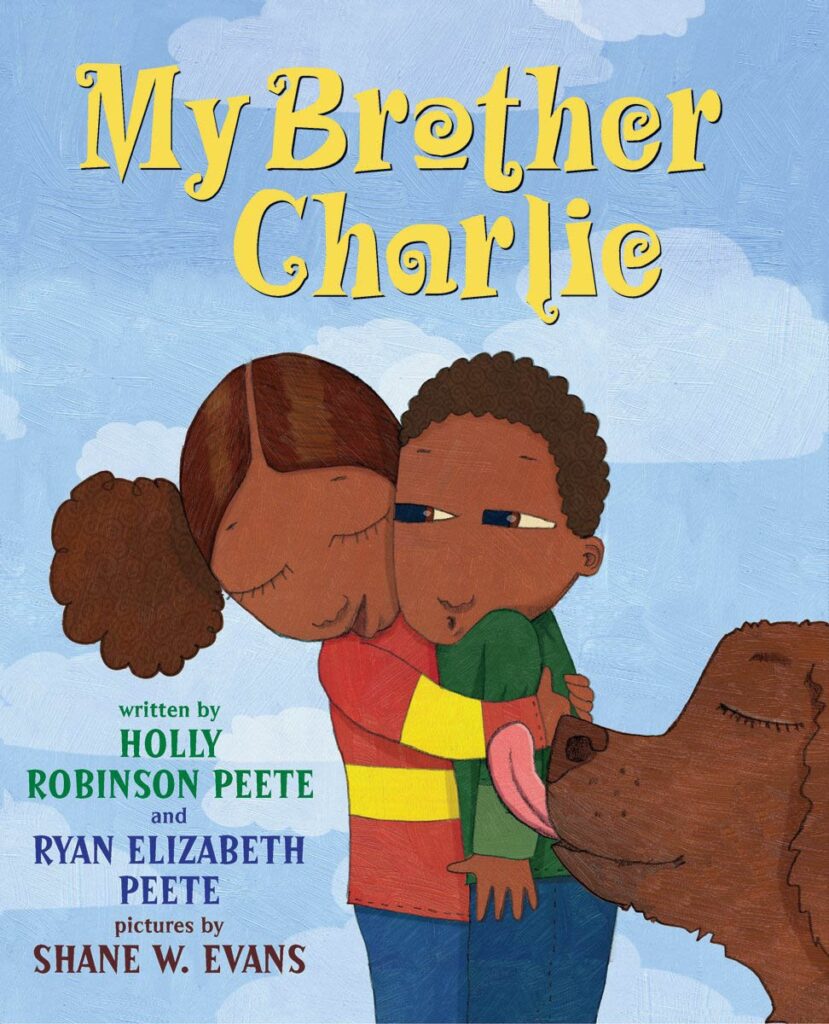
Charlie has autism. His brain works in a special way. It’s harder for him to make friends. Or show his true feelings. Or stay safe.” But as his big sister tells us, for everything that Charlie can’t do well, there are plenty more things that he’s good at. He knows the names of all the American presidents. He knows stuff about airplanes. And he can even play the piano better than anyone he knows. Actress and national autism spokesperson Holly Robinson Peete collaborates with her daughter on this book based on Holly’s 10-year-old son, who has autism.
Discussion Questions
Before Reading
- What are some things you love about your sibling (or best friend)?
- Have you ever met someone who communicates differently?
After Reading
- In the story, how do you know that Charlie is different?
- What are some things that Charlie finds challenging?
- Can you name three things Charlie does well?
- What does the author mean when she talks about “Charlie’s Blessings?”
- When the author says “Charlie has autism, but autism doesn’t have Charlie,” what does she mean?
Empathy and Relationships
- How does Callie show love and patience towards her brother?
- How does Charlie show his love for his family, even though he doesn’t use words?
- Why does Callie say “if you ever get to meet my brother, you’ll feel lucky to be his friend?”
- How can we be good friends to people who communicate differently?
Personal Reflection
- Are you and your siblings/friends alike or different?
- What’s a strength that you have?
- Have you ever felt misunderstood like Charlie?
- What did you learn about autism from reading this book?
Activities
- Draw a picture of a friend or family member and write or tell at least one “blessing” about that person.
- Working and Playing with People Who Are Different from Us
- Write the title “Working and Playing with People Who Are Different From Us” at the top of the board or on a piece of paper Begin by explaining to students that one helpful thing they can do is look for things they have in common with others—such as shared likes or dislikes, where they live, or favorite activities. Add “Look for things you have in common” to the chart.
- Next, ask readers “what else could you do?” Guide them in brainstorming additional ways to interact kindly and inclusively with others. As readers share ideas, record them. Suggestions may include:
- Asking someone to play
- Showing them something interesting
- Asking an adult how to help
- Being patient
- Smiling
- Using kind words
- Encourage discussion about how these actions an help everyone feel included and respected.