
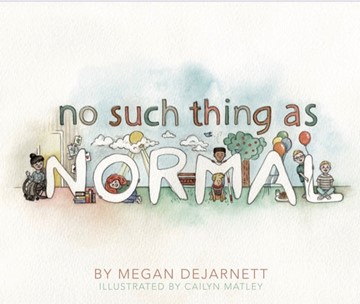
No Such Thing As Normal by Megan DeJarnett is a children’s book that teaches inclusion and acceptance by showing two brothers learning that “normal” doesn’t exist as they encounter diverse people, including those with disabilities, different appearances, and various abilities. Inspired by the author’s own experiences as a wheelchair user and mother to a child with a disability, the book uses a story format with discussion questions to help parents and educators talk to kids about diversity, disability, and celebrating uniqueness.
Discussion Questions
Identity and Self-Awareness
- What does normal mean? Do you think it means the same thing to everyone?
- How does the main character feel when trying to understand what normal is?
- What are some things that make you unique?
- Have you ever compared yourself to others? How did it make you feel?
Empathy and Understanding Others
- How do the different characters show that there are many ways to be normal?
- How might someone feel if they think they don’t fit in?
- Why is it important to understand and respect differences in others?
Self-Acceptance and Confidence
- What does the character learn about being normal by the end of the story?
- Why is it important to accept yourself instead of trying to be like everyone else?
- What is something you like about yourself that makes you different?
Inclusion and Relationships
- What are ways we can help others feel included?
- What could you say or do if someone feels left out?
- What does it look like to create a welcoming classroom / school / home?
Critical Thinking and Reflection
- Who decides what normal is? Is that fair?
- How would the world be different if everyone were exactly the same?
- Why might the idea of normal change depending on the situation or place?
- Finish this sentence: There is no one else exactly like me because…
- What is one way you can celebrate differences – in yourself or others – this week?
Activities
“All About Me” Identity Stars: Give each student or family member a star or silhouette outline. Inside, have them write or draw about themselves: things they like, their strengths, something that makes them unique, a challenge they’ve overcome. Display them together to show that everyone is different and that’s what makes this class (or family) strong.
No Such Thing As Normal Graph:
Setup
- Choose a space where students can move (classroom, gym, or even outside).
- Designate one side of the room as “Agree” and the opposite side as “Disagree.”
- You can:
- Tape paper signs on the walls that say AGREE and DISAGREE, or
- Verbally point out the sides before you begin.
- Explain that the middle of the room = “Sometimes / Unsure / In Between.” (This is important so it’s not just a yes/no choice.)
How It Works
Read a statement out loud (keep them relatable and low-risk), such as:
- “I like trying new things.”
- “I feel nervous in new situations.”
- “I prefer working alone.”
- “I enjoy being part of a group.”
Participants move to a spot in the room that matches how strongly they feel:
- Close to Agree = strongly agree
- Close to Disagree = strongly disagree
- Anywhere in between = mixed feelings
Reflection
After each statement (or after a few), ask:
- What do you notice about where people are standing?
- Is everyone in the same place? Why or why not?
- Did anyone feel like they were “the only one” somewhere?
- What does this show us about the idea of “normal”?
Key Take-Aways
There isn’t one “right” place to stand—just like there isn’t one way to be “normal.” Everyone’s experiences and feelings are valid, even when they’re different.